
Essential Steps Before Buying Lincoln Wheat Pennies
Buying Lincoln Wheat pennies without preparation is the fastest way to overpay. The series looks simple on the surface, yet values vary wildly based on date, mint mark, condition, and originality. The first essential step in the Lincoln wheat penny valuation is understanding what actually matters before browsing listings or stepping into a shop.
Start With the Dates That Control the Market
Not all Wheat pennies deserve equal attention. A small group of issues drives the most serious demand.
Focus first on these anchors:
1909-S VDB — low mintage, constant demand
1914-D — scarce across all grades
1922 Plain (No D) — mint mark absence creates rarity
1931-S — final low-mintage circulation issue
1955 Doubled Die — unmistakable variety with strong premiums
These dates form the backbone of the series. Everything else falls into place around them.
Common mistakes begin when buyers assume age equals value without cross-checking charts in a coin scanner app. A worn 1926 penny is still common. A sharply struck 1958-D can be far more desirable.
Set a Budget Tied to Condition, Not Hype
Price discipline protects you early.
A realistic framework:
Under $5: circulated common dates only
$20–$100: better semi-keys or high-grade commons
$200+: certified key dates or strong Mint State coins
Impulse buying happens when the budget ignores grades. Decide in advance what level you are targeting—filler, mid-grade, or investment quality—and stick to it.
Learn Color Designations Before Looking at Listings
Copper color affects value more than many beginners expect.
RD (Red): original mint color, highest premium
RB (Red-Brown): partial toning, moderate value
BN (Brown): fully toned, lowest tier
A Red example can sell for several times the price of the same coin in Brown. Artificial brightness, however, destroys value. That distinction matters later.
Use Fast Screening Tools Early
Before diving deeper, eliminate obvious non-candidates. Quick checks on date, mint, and basic specs save time. A free coin appraisal app helps here by identifying coins from photos and showing year, composition, weight, and typical market range. It keeps expectations grounded before serious evaluation.
Preparation sets the ceiling for success. Know the key dates. Tie your budget to condition. Respect color and originality. With this foundation in place, the next step is learning how to verify condition and authenticity before committing money.
Verify Condition and Authenticity Before You Commit
Once you know which Wheat pennies matter and what you can afford, the real work begins. Most buying mistakes happen at this stage, when coins look right but fail basic authenticity or condition tests.
Inspect Condition With a Purpose
You do not need to master professional grading, but you must recognize warning signs.
Start with a 10× loupe and check these areas:
Lincoln’s cheek and jaw — heavy wear flattens detail first
LIBERTY lettering — weak or merged letters signal low grade
Wheat stalk lines — sharp, separated lines indicate higher quality
Coins with strong central detail usually grade higher than edge-focused examples.
Spot Cleaning and Surface Manipulation Early
Cleaning is the most common value killer for Wheat pennies.
Red flags include:
Fine parallel hairlines across fields
Uniform, unnatural brightness
Patchy or spotted toning near letters
Original copper tones develop unevenly. Artificial shine looks flat and lifeless under light. A cleaned coin can lose 50% or more of its market value instantly.
Confirm Metal and Weight Every Time
Basic physical tests expose many altered coins and counterfeits.
Essential checks:
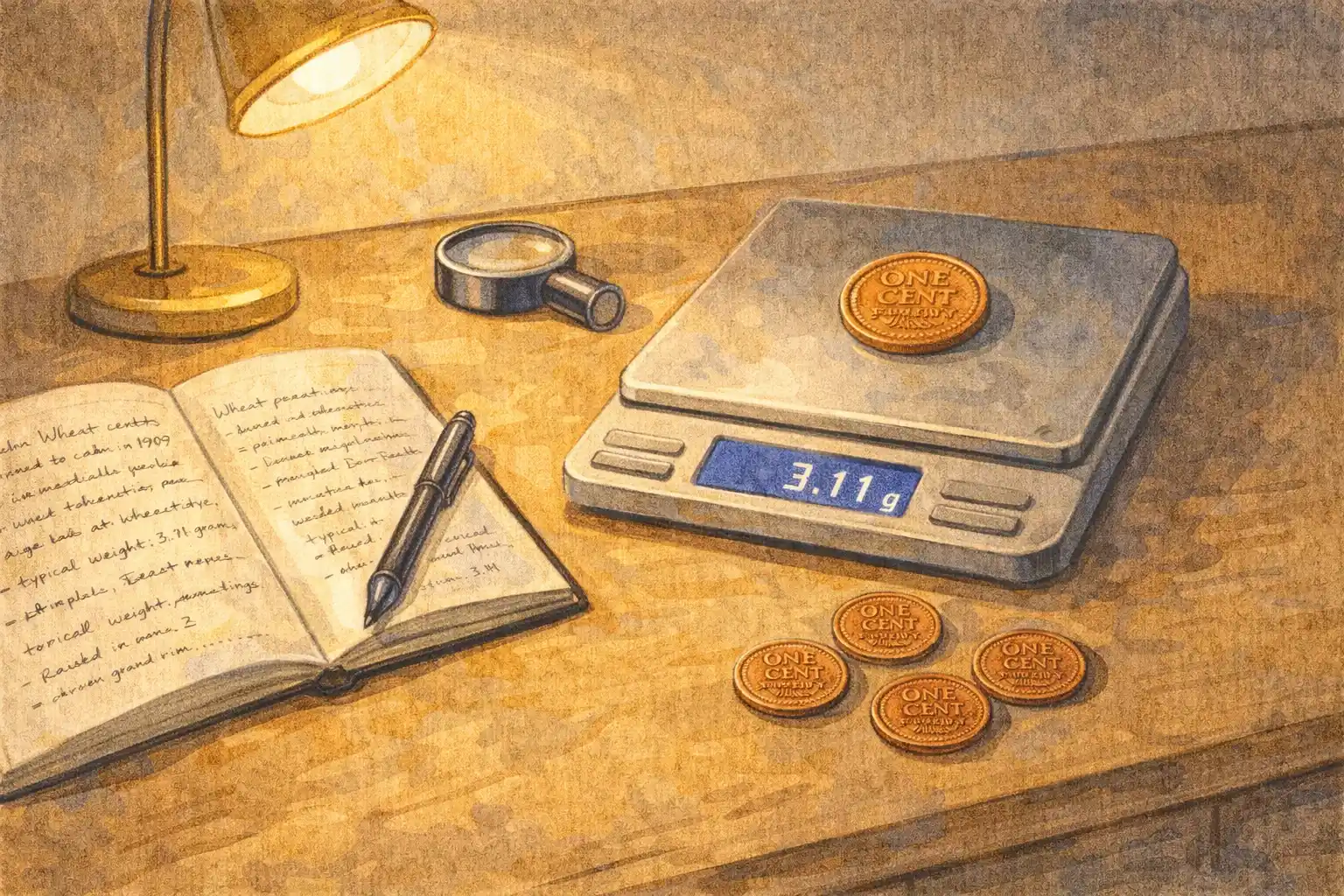
Pre-1982 bronze cents: about 3.11 grams
1943 steel cents: magnetic
Non-magnetic “1943 copper” coins: isolate immediately for expert review
Most fake rarities fail weight or magnet tests. Always verify before trusting labels or stories.
Authenticate Key Dates Carefully
Key-date Wheat pennies attract reproductions.
Pay close attention to:
Mint marks — look for correct shape and placement
VDB initials on 1909 coins — mushy or oversized letters raise concern
Date spacing — altered numerals often sit unevenly
For expensive purchases, certification from PCGS or NGC is non-negotiable.
Use Digital Cross-Checks Wisely
Before buying, compare your coin against verified references. Tools like Coin ID Scanner simplify this step by generating coin cards from photos that list year, composition, diameter, weight, and indicative pricing. It helps confirm that what you see aligns with known specifications before you proceed.
Condition and authenticity define value more than rarity alone. Clean surfaces, correct weight, sharp details, and verified specs matter every time.
Buy From the Right Sources and Finish the Deal Safely
Even a well-researched, authentic Wheat penny can become a bad purchase if the seller, documentation, or final checks are ignored. The last step focuses on reducing risk at the moment money changes hands.
Choose Sellers With Accountability
Where you buy matters as much as what you buy.
Safer options include:
PCGS or NGC–certified coins from established auctions
Reputable platforms like Heritage Auctions
eBay sellers with long histories, strong feedback, and clear return policies
High-value Wheat pennies should not rely on trust alone. Certification protects both buyer and seller.
Be cautious with:
Flea market “gems”
Estate lots without documentation
Sellers who refuse returns or additional photos
If transparency is missing, walk away.
Evaluate Errors and Varieties Carefully
Errors can add serious value, but only when they are genuine and recognized.
Focus on:
Doubled dies with clear, rounded doubling
Wrong planchet strikes confirmed by weight and metal
Documented varieties listed by PCGS or major references
Avoid coins where:
Doubling looks flat or shelf-like
Edges show filing or tool marks
The story sounds better than the evidence
Real errors show precision. Post-mint damage does not.
Final Pre-Purchase Checklist
Before buying any Wheat penny, pause and confirm:
Date and mint match known scarcity
Condition aligns with the asking price
Color appears natural, not polished
Weight and magnetism are correct
Seller offers verification and returns
Tools like Coin ID Scanner help consolidate this process by letting you log coins digitally, compare specs against known data, and track potential purchases before committing. It reduces duplicate buys and keeps decisions objective.
Store Immediately After Purchase
Once acquired, protect the coin right away.
Best practices:
Use PVC-free holders or albums
Avoid soft plastic flips
Store in a dry, stable environment
Proper storage preserves both appearance and liquidity.
Buying Lincoln Wheat pennies successfully requires discipline, verification, and patience. Research the right dates. Respect condition and originality. Buy only from accountable sources. When every step is followed, each purchase strengthens your collection instead of weakening it.
The goal is not to buy often. It is to buy correctly.
