
Why the 2022 Maya Angelou Quarter Became More Than Just Spare Change
Why the 2022 Maya Angelou Quarter Became More Than Just Spare Change
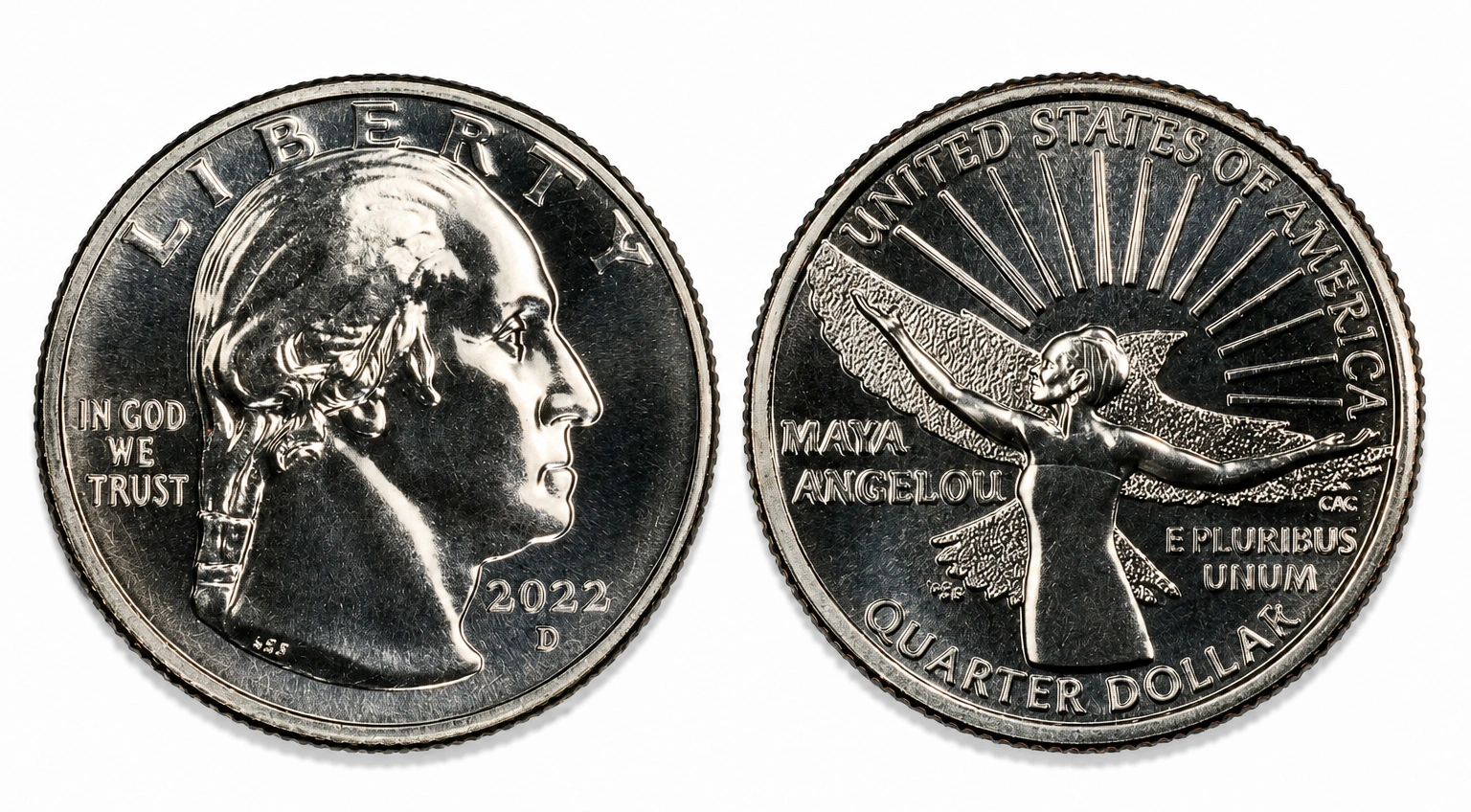
Artist Emily Damstra created the detailed 2022 Maya Angelou Quarter reverse design.
Sculptor Craig Campbell executed the physical engraving of this artwork.
Reverse surfaces feature a standing woman holding her arms toward the sky.
A flying bird and a rising sun appear behind the central figure.
These visual elements directly reference the most famous literary work written by the author.
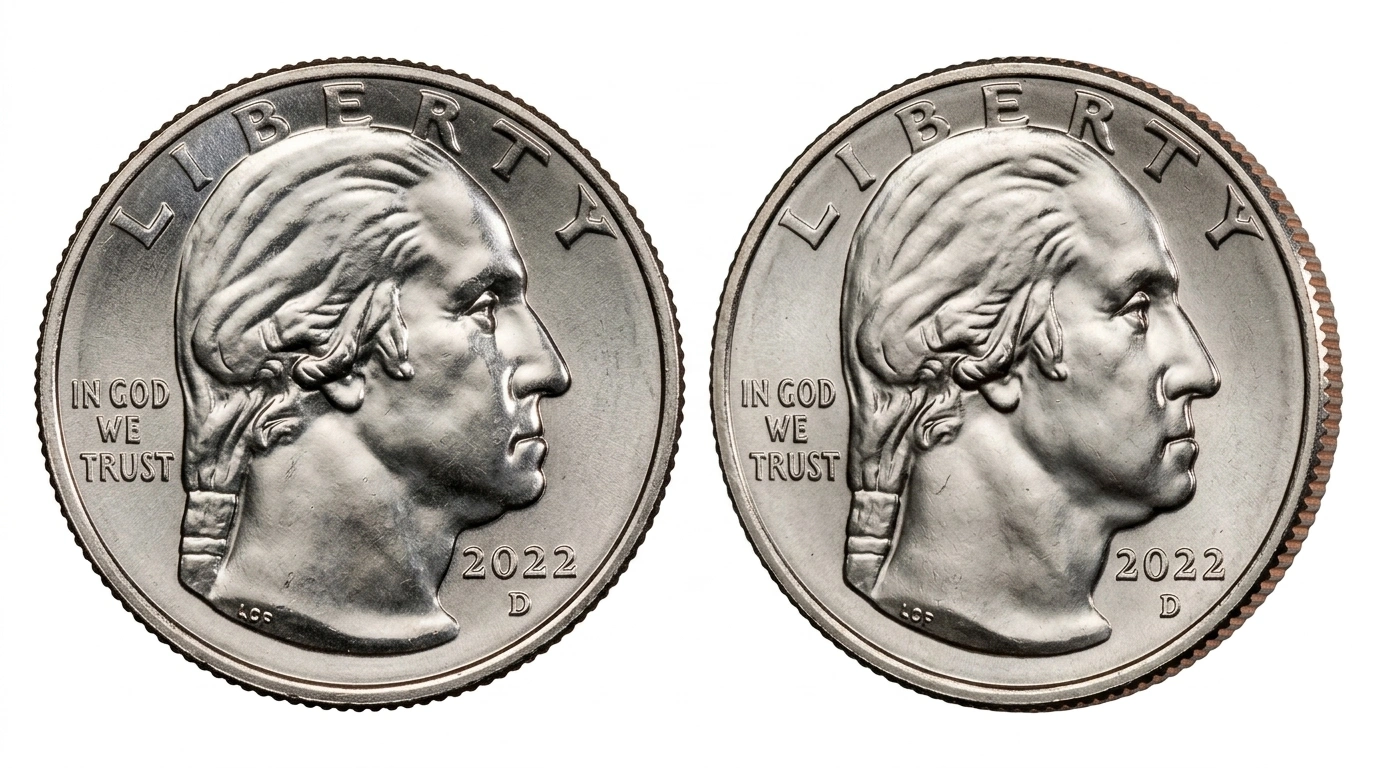
Obverse fields display a restored portrait of first president George Washington.
Sculptor Laura Gardin Fraser designed this specific bust in 1932.
Officials originally rejected her submission in favor of John Flanagan's design.
Ninety years later, mint directors chose this highly expressive portrait for the new coin series.
Production Volumes by Mint Facility
Three major United States mint facilities manufactured these coins.
Cumulative mintage surpassed half a billion individual pieces.
Philadelphia Mint
This facility uses the P mint mark.
Total production reached 237,600,000 pieces.
These specimens entered general circulation.
Denver Mint
This facility uses the D mint mark.
Total production reached 258,200,000 pieces.
These coins entered national commerce.
San Francisco Mint
Collectible coins from this facility bear the S mint mark.
Total production of proof coins reached 303,520 pieces.
Total mintage of silver proof collectible coins reached 338,270 pieces.
These products were distributed exclusively to numismatists.
Mint Errors
Massive production figures typically decrease the value of standard coins.
Damaged or defective specimens represent the major exception.
These distinct variations occur because of die damage or machinery wear.
Each error type possesses unique visual identifiers.
Drooling George
This specific defect displays a metal flow near the mouth of the president.
Damage occurs when a die crack develops near the lips of the portrait.
Resulting coins show a raised metal bump.
Size of this die break directly determines the final market valuation.
Minor die cracks appear frequently.
Large and distinct metal flows command significant premiums.
In 2024 value reached $150 per piece.
In 2025 value increased to $350 per piece.
In 2026 market value reached $600 per piece.
Record auction price achieved $1900 for a specimen in immaculate condition.
Nesting Bird
This error describes a reverse die crack near the bird.
Die damage creates an extra metal line near the beak of the flying bird.
Visually, this flaw resembles a small branch or a nest.
Alterations of the original design attract collectors of rare varieties.
Individual valuations depend on the size of the crack.
In 2024 value reached $100 per piece.
In 2025 value rose to $220 per piece.
In 2026 market value reached $450 per piece.
Highest known auction record stands at $1000 per piece.
Die Gouge
This defect appears as a deep groove on the coin field.
Damaged dies transfer a raised line onto the blank metal.
Most examples show the line running across the cheek or neck of the president.
Imperfections often resemble a scar or a facial mark.
Collectible value depends on the length and height of the raised line.
In 2024 value reached $40 per piece.
In 2025 value increased to $90 per piece.
In 2026 market value reached $180 per piece.
Off Center Strike
This error occurs when the design shifts away from the center of the planchet.
Improper feeding of the metal blank into the coining press causes this displacement.
Part of the official design disappears completely.
Unstruck blank metal remains visible on the edge.
Numismatists prize specimens showing over fifty percent shift while retaining the date.
In 2024 value reached $250 per piece.
In 2025 value increased to $400 per piece.
In 2026 market value reached $650 per piece.
Professional Grading and Elite Preservation
Surface preservation remains the deciding factor for ultimate market valuation.
Professional grading services like the Free Coin Scanner utilize the Sheldon scale ranging from 1 to 70 points.
Coins achieving MS67 grade command vast premiums compared to circulated pocket change.
Price differences between consecutive grades can be astronomical.
Philadelphia Mint Coins in High Grades
Most circulating coins suffer from surface abrasions.
Finding specimens without visible scratches represents a major challenge.
Philadelphia coins achieving MS67 grade command exceptional prices.
In 2024 value reached $900 per piece.
In 2025 value reached $1400 per piece.
In 2026 market value reached $1950 per piece.
Record public auction price stands at $2375 for a single coin.
Denver Mint Coins in High Grades
Denver specimens in perfect condition occur slightly more often.
Superior die preparation at the Denver facility accounts for this trend.
Nevertheless, MS67 grade coins remain highly elusive.
In 2024 value reached $700 per piece.
In 2025 value reached $1100 per piece.
In 2026 market value reached $1550 per piece.
San Francisco Mint Coins
This facility manufactured coins specifically for collector sets.
Proof manufacturing techniques minimize physical handling damage.
Silver compositions enjoy steady demand due to precious metal content.
Copper and nickel compositions carry lower valuations.
In 2024 value of silver specimens reached $18 per piece.
In 2025 value reached $22 per piece.
In 2026 market value reached $28 per piece.
Value Progression by Year
Market valuations demonstrate steady upward movement.
Gradual removal of coins from circulation combined with growing demand drives this process.
Price Trend for Philadelphia Coins
2022 value: $0.25 per piece
2023 value: $1.50 per piece
2024 value: $3.20 per piece
2025 value: $4.80 per piece
2026 value: $6.50 per piece
Price Trend for Denver Coins
2022 value: $0.25 per piece
2023 value: $1.30 per piece
2024 value: $2.80 per piece
2025 value: $4.10 per piece
2026 value: $5.90 per piece
Factors Influencing Appreciation
Several interconnected variables drive numismatic appreciation.
This economic progression can be visualized through logical chains.
Grade Impact Chain
Zero contact with other coins → High grade on the official certification scale → Limited market supply → Rising final value
Error Origin Chain
Intense coinage press operation → Rapid die deterioration → Emergence of rare visual variations on the planchet → Elevated market value
Authentication and Evaluation Procedures
Discovering a valuable coin requires a systematic examination process.
Collectors must rule out artificial modifications created by unscrupulous sellers.
Tools for Home Inspection
Basic equipment is necessary for proper coin examination.
Scale
Gloves
Professional Grading Process
Self-evaluation lacks commercial authority among serious investors.
Submitting coins to PCGS professional grading remains essential.
Registering on the official website of the grading firm
Filling out a detailed submission form
Packaging the coin securely inside a protective container
Mailing the package using a secured postal service
Awaiting professional chemical composition analysis
Some sellers attempt to replicate rare errors using mechanical tools.
Distinguishing genuine mint errors from post-mint damage is crucial.
Tool marks along the original design boundaries
Adhesive residue around the raised metal areas
Unnatural surface color around the defect
Weight discrepancies when compared to standard specifications
